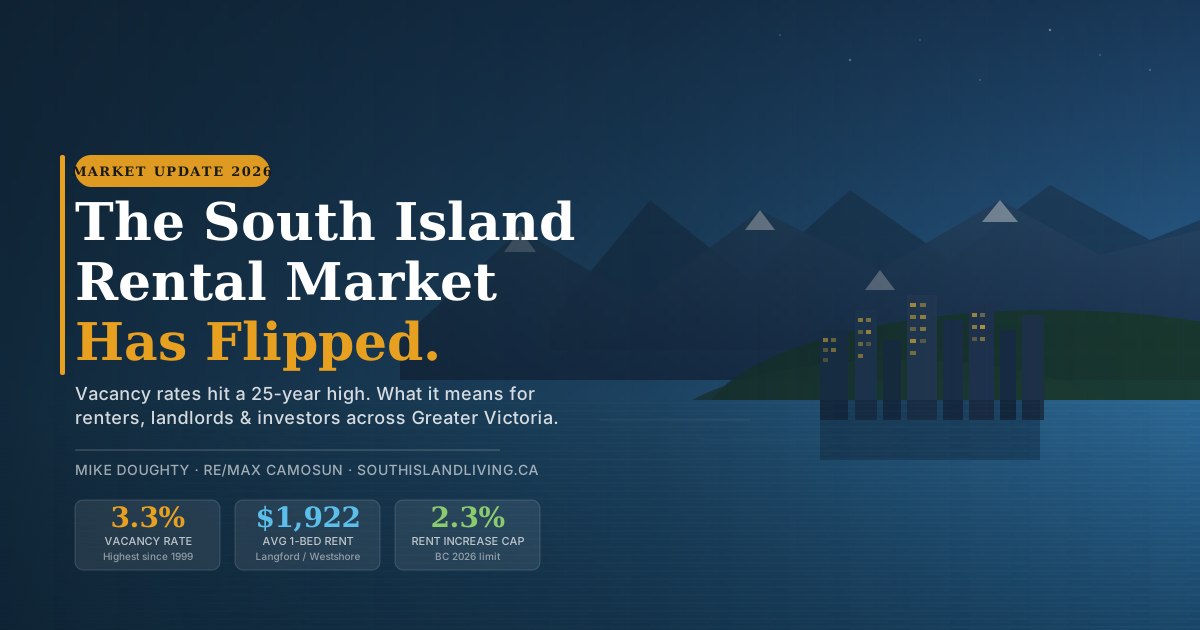
The rental market on Southern Vancouver Island has shifted dramatically. Vacancy rates are at a 25-year high, rents are softening, and renters finally have options. Here's what's happening — and what it means for you.
If you've been renting on Southern Vancouver Island for the past several years, you already know how brutal it's been. Sub-1% vacancy rates. Multiple applications for a single unit. Landlords hold all the cards. For a long time, the rental market here felt less like a free market and more like a scramble.
That era is over — at least for now.
The rental landscape across Greater Victoria, the Westshore, and much of Vancouver Island has shifted significantly heading into 2026. Vacancy rates have hit levels not seen since the late 1990s, rents are softening in many areas, and renters are finally sitting across the table with some negotiating power. Whether you're a renter, a landlord, or someone wondering whether it makes more sense to buy or keep renting, here's what the data actually shows — and what it means on the ground.
Vacancy Rates: A 25-Year High
The headline number is hard to ignore. Greater Victoria's vacancy rate rose to 3.3%, the highest it's been since 1999, according to the CMHC's 2025 Rental Market Report. To put that in context, the vacancy rate stood at just 1.4% as recently as October 2022. That's a dramatic reversal in a very short window of time.
What drove the shift? Two big forces are working at the same time:
New supply hit the market. Between October 2024 and September 2025 alone, 882 new housing units were completed in Victoria — surpassing the Province's own target of 766 units for that period. Much of this new supply is concentrated in Saanich and the Westshore, particularly Langford. The CMHC report notes that vacancy rates increased significantly in the downtown core and Saanich, largely due to higher rental supply in these areas.
Short-term rentals returned to the long-term market. Provincial regulations on platforms like Airbnb pushed thousands of units back into the long-term rental pool. B.C. continues to lead the country in asking-rent declines, down 8.5% over the past two years, with short-term rental restrictions cited as a key factor.
Demand softened. Victoria has faced outflows of international migrants and students, along with a weaker labour market for younger people, both of which reduced rental demand. Fewer new households forming means fewer renters entering the market.
What's Happening to Rents Across the South Island?
The picture on rents is a bit more nuanced than the vacancy story suggests. Asking rents — what landlords are listing units for — have been declining across most of the region. But average rents in purpose-built buildings have actually gone up in some areas, driven largely by turnover: when a unit changes hands, it resets to market rate.
Here's a regional snapshot of approximate average rents based on current market data:
A few things stand out here. Duncan continues to punch above its weight — strong demand relative to price makes it one of the more stable rental markets on the Island, especially for renters priced out of Victoria. Sooke is softening a bit, which tracks with its distance from employment centres. And Langford — which has seen a flood of new purpose-built supply — is in what the CMHC describes as a "highly competitive" position, with landlords now offering incentives that were unthinkable just two years ago.
The Westshore: Ground Zero for the Shift
If you want to understand where the rental market transition is most visible, look at Langford and Colwood. The Westshore absorbed a disproportionate share of new construction over the past few years, and that supply is now competing for tenants all at once.
The result? Landlords in the Westshore are increasingly using signing bonuses, a free month's rent, or moving allowances to attract tenants — rather than permanently lowering their monthly asking price. It's a strategy designed to protect long-term asset value while staying competitive in a crowded market.
For renters, this is genuinely good news. If you're looking at a new building in Langford right now, it's worth asking about the incentives on the table. There's a decent chance something is available.
What This Means for Landlords and Investors
If you own a rental property on the South Island, the 2026 rent increase cap is set at 2.3%. That's not nothing — but with vacancy up and more competition for tenants, the real priority right now isn't maximizing annual increases. It's keeping good tenants in place.
A vacancy in a softening market is expensive. Between lost income, turnover costs, and the time to lease a unit back up, losing a reliable tenant can easily cost two to three months' rent. The math strongly favours retention.
A few things worth focusing on right now:
Keep up with maintenance. In a market where renters have options, deferred repairs are a reason to leave.
Highlight value-adds in your marketing. In-suite laundry, parking, storage, and transit proximity matter more than ever when competition is high.
Think carefully about new investment underwriting. The era of banking on aggressive rent resets between tenancies has paused. Conservative projections are the right call right now.
Is It Better to Rent or Buy Right Now?
This is the question I get more often than any other lately, and the honest answer is: it depends on your situation.
What I can say is that the rental market cooling doesn't necessarily mean buying is the wrong move — especially if you're planning to stay on the Island long-term, building equity matters to you, and you're in a stable financial position. What it does mean is that renters are no longer being forced into rushed buying decisions just to escape an impossible rental market. You have a little more breathing room to make the right choice for your life.
The Bottom Line
The South Island rental market in 2026 is going through a genuine reset. With more renters looking and prices starting to ease, the outlook heading into the 2026 rental season is mixed — demand remains strong, particularly in lifestyle-driven markets like Victoria, but the increase in supply and higher vacancy rate appear to be cooling upward pressure on prices.
This isn't a market in crisis — it's a market normalizing after years of extreme scarcity. For renters, that's long-overdue good news. For landlords and investors, it's a reminder that thoughtful, relationship-based property management wins over the long run.
Vancouver Island is still one of the best places in the country to live. That hasn't changed. The market dynamics around it just got a little more balanced.
Have questions about how the current rental market affects your real estate plans? Whether you're thinking about buying, investing, or just figuring out your next move, I'm happy to talk it through.
Mike Doughty | RE/MAX Camosun | 778-400-0475 | mike@mikedoughty.ca | www.southislandliving.ca