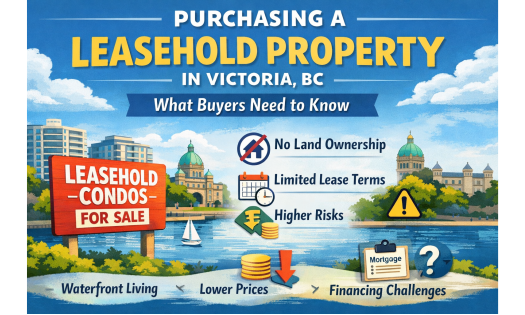
Leasehold properties are a unique — and often misunderstood — segment of the Victoria, BC real estate market. Buyers are frequently drawn in by lower prices, prime locations, or waterfront access, only to realize later that leasehold ownership works very differently than freehold or strata ownership.
In Greater Victoria, leasehold homes and condos are most commonly found in areas like James Bay, Esquimalt, View Royal, Saanich, and select waterfront or reserve lands. Before purchasing a leasehold property on Vancouver Island, it’s critical to understand how these properties work, how financing differs, and what long-term ownership really looks like.
This guide breaks it all down — in plain English.
What Is a Leasehold Property in Victoria?
When you buy a leasehold property in Victoria, you are purchasing the right to occupy and use a home or condo for a fixed period of time, based on a lease agreement. You do not own the land.
The land is owned by a third party, often:
A First Nations band
A government or crown entity
A church or institutional landowner
Lease terms in Victoria typically range from 20 to 99 years, and the number of years remaining on the lease plays a major role in price, financing, and resale value.
Why Victoria Has Leasehold Properties
Leasehold ownership exists in Victoria largely due to:
Reserve lands within urban areas
Long-held institutional land ownership
Historical land use agreements
Because land in Victoria is limited and expensive, leasehold arrangements have allowed development in desirable areas while keeping land ownership intact.
Advantages of Buying a Leasehold Property in Victoria
1. Lower Purchase Prices
Leasehold properties in Victoria are often significantly more affordable than comparable freehold or strata properties. This can allow buyers to enter neighbourhoods they might otherwise be priced out of.
2. Prime Locations
Some leasehold condos are located near:
Downtown Victoria
The Inner Harbour
Waterfront walkways and parks
Location is often the biggest draw.
3. Strata-Like Living
Many leasehold condos operate similarly to standard strata properties, with shared maintenance, amenities, and management — though land rent is an added cost.
Key Disadvantages Buyers Need to Understand
1. You Don’t Own the Land
This limits long-term appreciation and control. At the end of the lease, ownership typically reverts back to the landowner unless the lease is renewed.
2. Financing Is More Restrictive
Not all lenders finance leasehold properties in Victoria. Those that do usually require:
A minimum number of years remaining on the lease
Larger down payments
More conservative lending terms
As the lease gets shorter, mortgage options decrease.
3. Resale Can Be More Challenging
Leasehold properties generally decline in value as the lease term shortens, particularly once the remaining term drops below typical mortgage lengths.
4. Land Rent and Increases
Most Victoria leasehold properties include:
Monthly or annual land rent
Scheduled increases
Clauses that can affect affordability over time
These costs must be reviewed carefully.
Financing a Leasehold Property in Greater Victoria
Mortgage approval depends heavily on:
Years remaining on the lease
Who owns the land
Renewal clauses
Overall marketability
Many buyers are surprised to learn that a property can be financeable today but not in 10–15 years. This matters even if you don’t plan to stay long-term.
Working with a local REALTOR® and mortgage professional who understand Victoria leasehold financing is essential.
Leasehold vs Freehold vs Strata in Victoria
Leasehold properties are best viewed as a lifestyle purchase, not a traditional long-term investment.
Questions to Ask Before Buying a Leasehold in Victoria
Before making an offer, buyers should clearly understand:
How many years remain on the lease?
Is lease renewal permitted?
How is land rent calculated and increased?
Who owns the land?
Are there resale or rental restrictions?
What lenders will finance this property?
If these answers aren’t crystal clear, that’s a red flag — not a maybe.
Who Should Consider Leasehold Ownership?
Leasehold properties in Victoria can make sense for:
Buyers prioritizing location over appreciation
Short- to medium-term ownership plans
Buyers who understand the lease structure
Cash buyers or those with flexible financing
They are not ideal for buyers focused on long-term equity growth or maximum resale flexibility.
Final Thoughts: Leasehold Properties in Victoria Require Extra Due Diligence
Leasehold ownership isn’t bad — but it is different, and in a market like Victoria, those differences matter.
The price might look attractive, but the real value is in understanding:
The lease terms
The long-term costs
The resale realities
If you’re considering a leasehold property in Victoria or the Westshore, having an experienced local REALTOR® review the lease and walk you through the implications can save you from expensive surprises later.
Because when it comes to leasehold real estate, the fine print matters just as much as the view.