BC Assessment has released the 2026 property assessments, and, as usual, this time of year brings plenty of questions from homeowners across Langford, the Westshore, Shawnigan Lake, Cobble Hill, Mill Bay, Duncan and Greater Victoria.
Some people are surprised by the number. Others are relieved. And many wonder the same thing: “Is this what my home is really worth?”
The short answer: assessments are useful — but they’re only one piece of the puzzle.
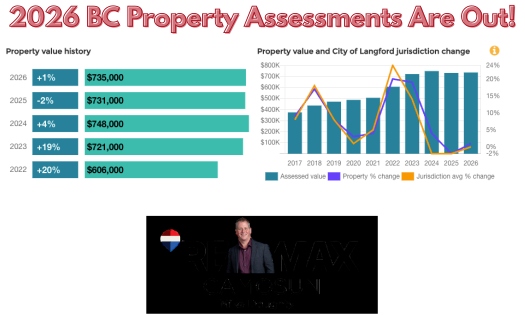
(The chart above shows how assessed values can change year over year. It’s a good visual reminder that assessments move in cycles and don’t always line up perfectly with today’s market.)
What a BC Assessment Actually Represents
A BC Assessment is an estimate of your property’s market value as of July 1 of the previous year.
That’s the key detail many people miss.
For the 2026 assessment:
Values are calculated as of July 1, 2025
They are released in January 2026
Which means they are already about six months old by the time you receive them
Markets don’t stand still for six months — especially on Vancouver Island. Conditions can shift due to interest rates, buyer demand, inventory levels, and seasonal trends. That’s why assessments should never be relied on as a sole indicator of value.
They’re a snapshot in time — not a live market read.
How Do 2026 Assessments Compare to Last Year?
Compared to 2025, many properties across the region are seeing small to moderate changes, with some up, some down, and others relatively flat.
A few important reminders:
Assessments are based on past market data, not current listings
Your change matters less than how it compares to similar nearby homes
A rising assessment does not automatically mean rising taxes
This is why two neighbours with similar homes can have different assessment changes — and very different tax outcomes.
Do Higher Assessments Automatically Mean Higher Property Taxes?
Not necessarily — and this is where the mill rate system matters.
In BC, property taxes are based on:
Municipal budgets (what the city needs to collect)
The total assessed value of all properties
Your property’s share relative to others
So:
If your assessment rose less than the average, your taxes could stay flat or even decrease
If municipal spending is controlled, large tax jumps are less likely
Assessments themselves don’t create taxes — budgets do
Think of it like dividing a bill at a restaurant. If everyone’s meal goes up, your share might not change much at all.
Why Assessments Are Only One Tool — Not the Final Word
When I help clients value a property, BC Assessment is just one of several tools I look at.
A proper valuation also considers:
What the market has done recently
What the market is currently doing
Recent comparable sales (not just listings)
Location, condition, layout, zoning, and buyer demand
Two homes with the same assessment can sell for very different prices depending on timing and market conditions. That’s why assessments are helpful for context — but they don’t replace real-world market analysis.
When an Assessment Might Be Incorrect
Because assessments are done at scale, inaccuracies do happen.
Common issues include:
Incorrect square footage or lot size
Condition not fully reflected (original vs updated)
Overstated views, access, or usability
Poor comparable selection
Zoning or development limitations
Before appealing, it’s worth reviewing the details and comparing your property to truly similar homes nearby.
How to Dispute Your BC Assessment
If after reviewing everything you believe your assessment is inaccurate, you can take action.
General steps:
Review your property details carefully
Compare against similar assessed properties
Contact BC Assessment for clarification
File a formal appeal if necessary (before the deadline)
You can start the process here:
👉 https://www.bcassessment.ca
Deadlines are strict, so don’t wait if you have concerns.
Final Thoughts
BC Assessments are useful — but they’re not a price tag and they’re not a crystal ball.
They’re a six-month-old snapshot that helps municipalities calculate taxes, and they’re just one of many tools I use when evaluating a property’s true market value.
If you’re unsure whether your assessment makes sense, or you’d like help comparing it to real market data and recent sales, feel free to reach out. A quick conversation can often provide clarity — and sometimes save you money.
Questions? I’m always happy to help.